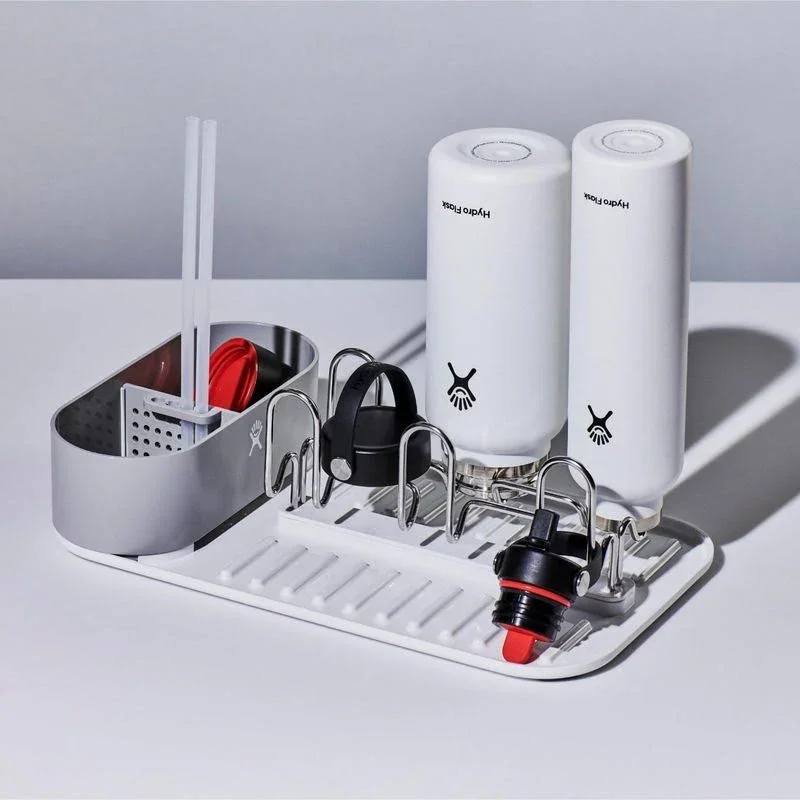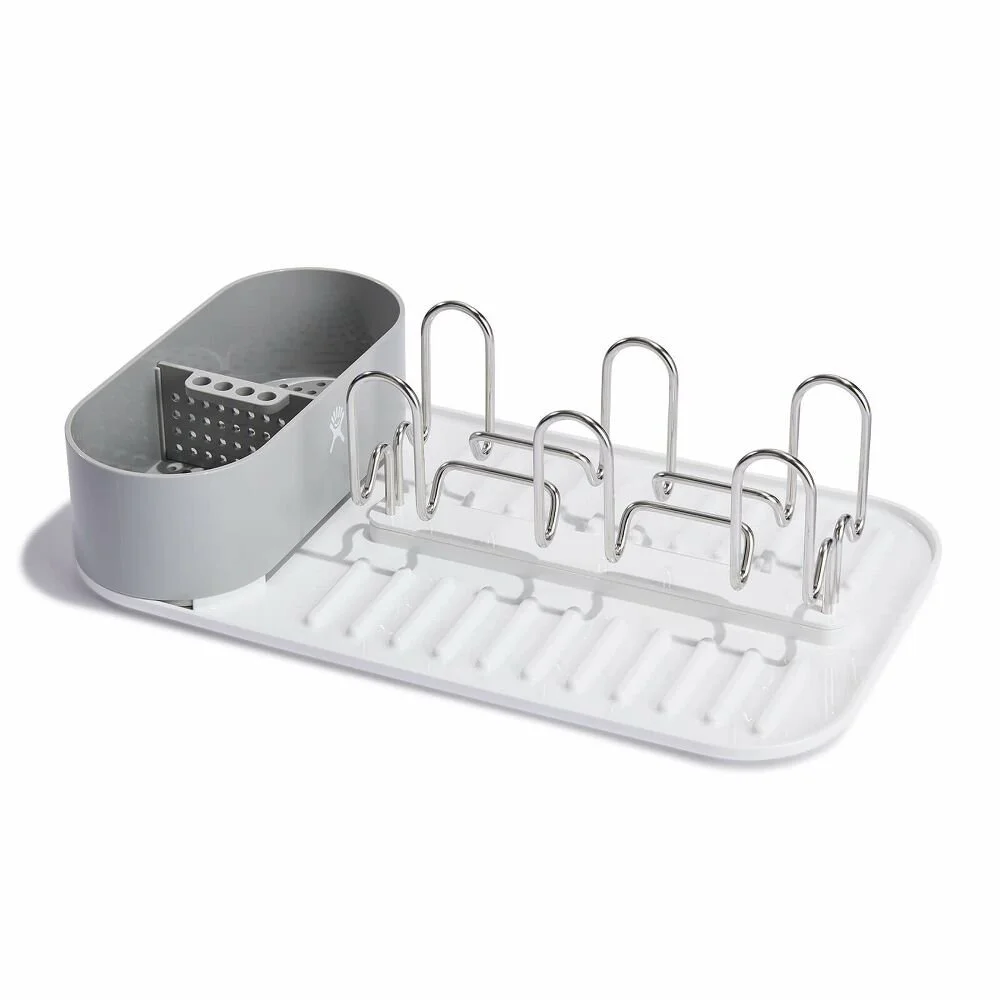
Drying Rack
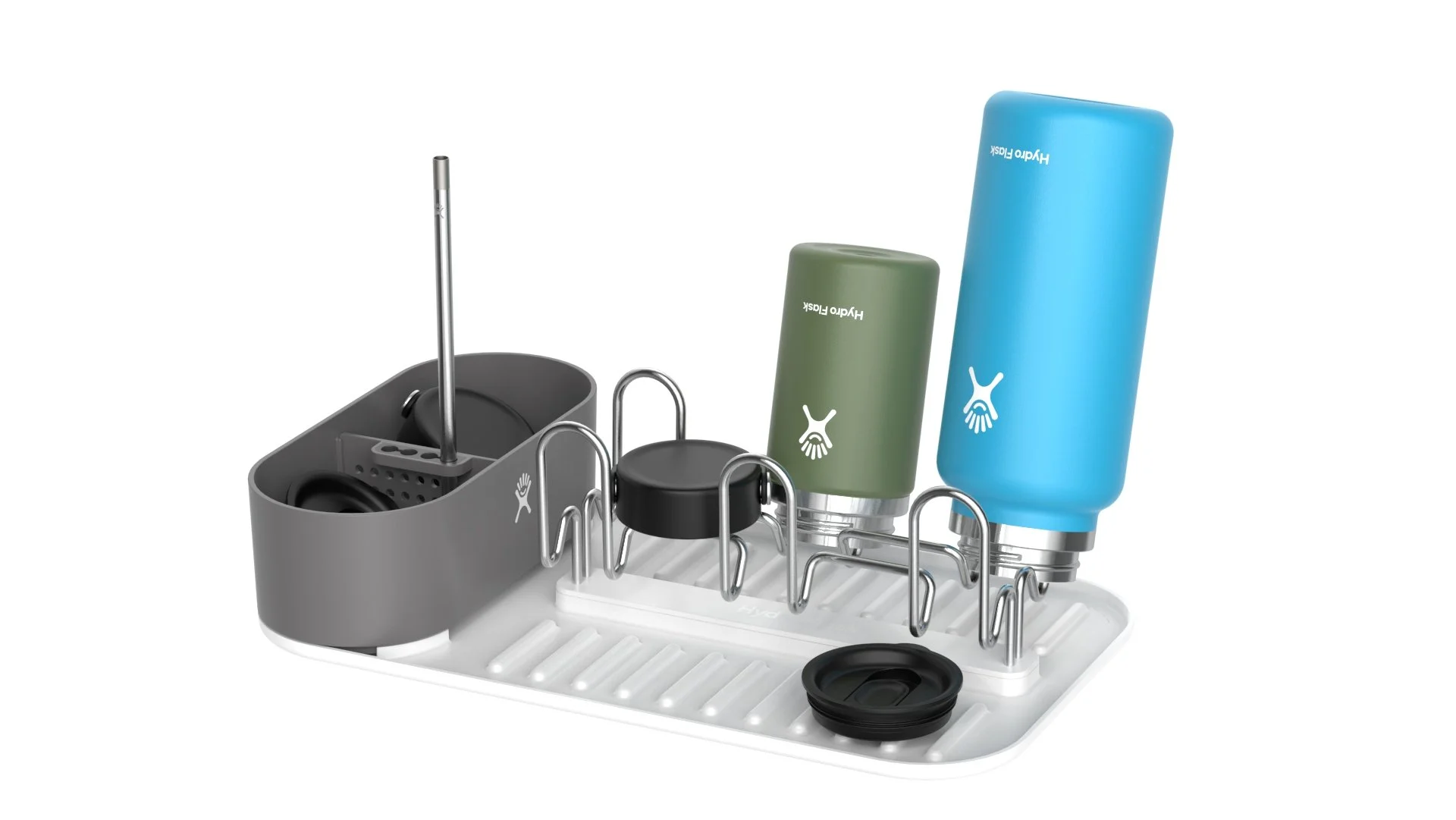
I led the industrial design for Hydro Flask’s drying rack through an iterative process that balanced user needs, manufacturing constraints, and the brand’s design intent.
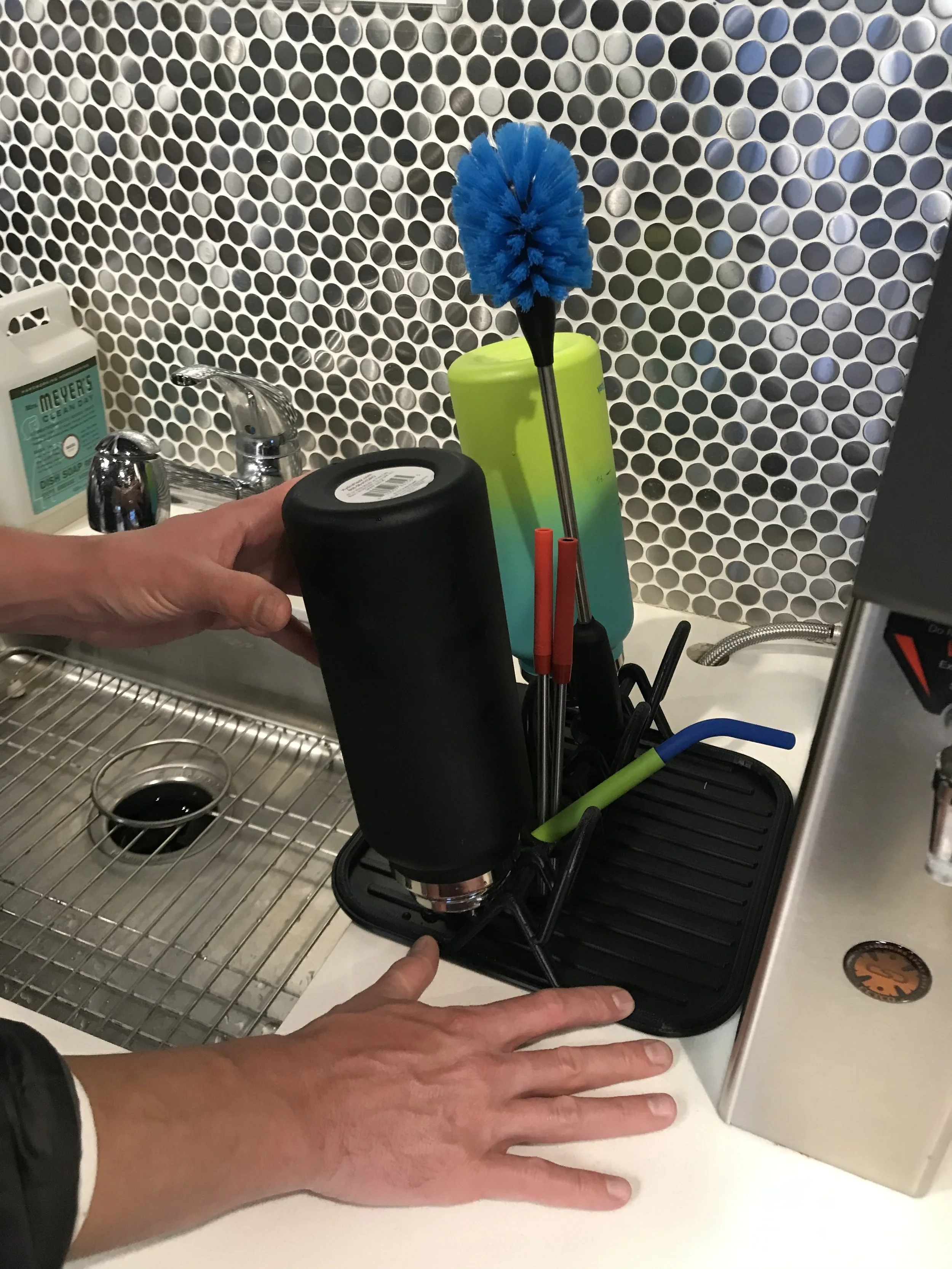
We began by studying competitors and observing users in their kitchens to uncover pain points: limited counter space, instability with different bottle sizes, and hygiene concerns. Early concepts explored modularity, water drainage, and compact storage, always aligning with Hydro Flask’s materials and aesthetic standards.
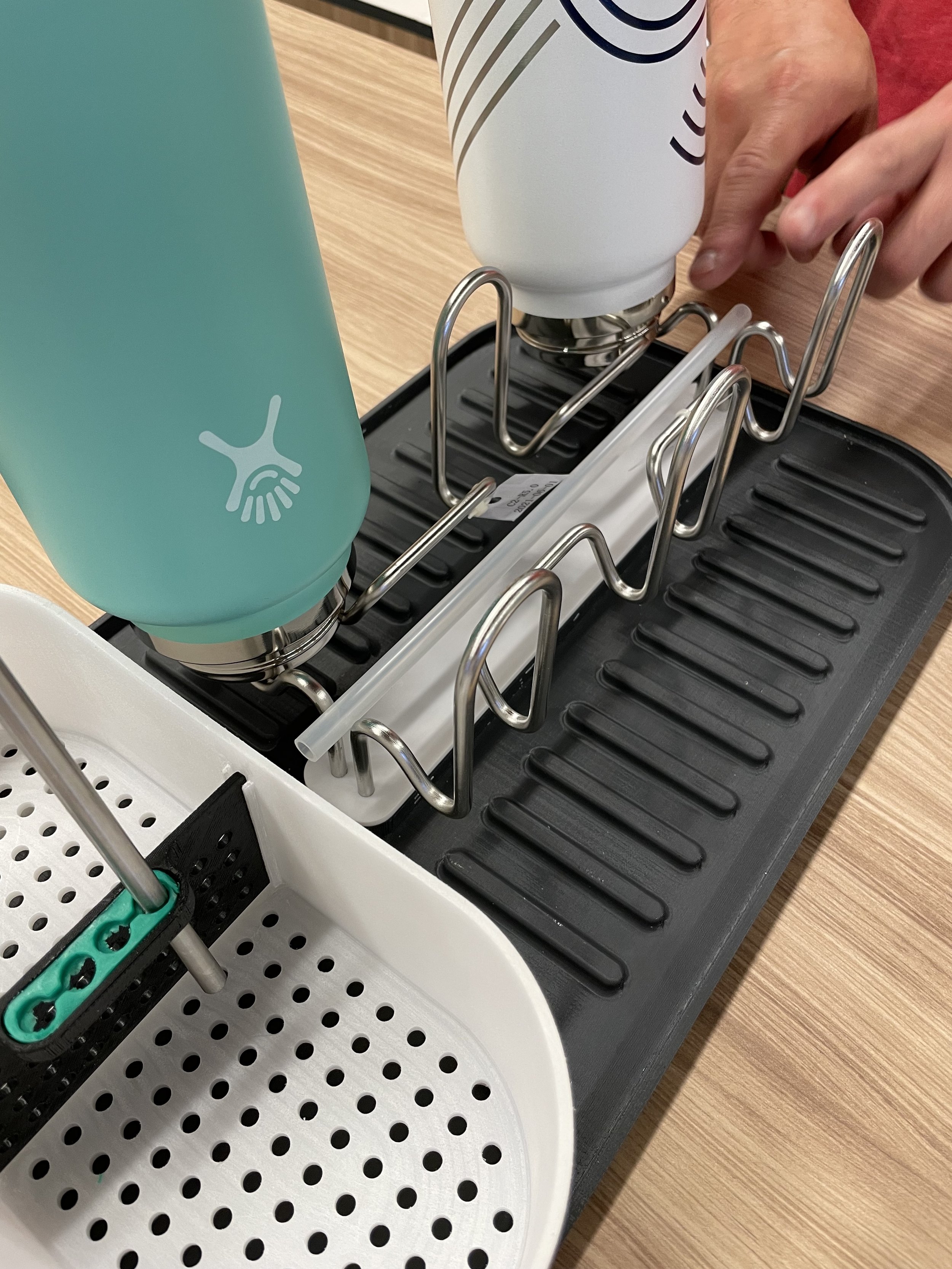
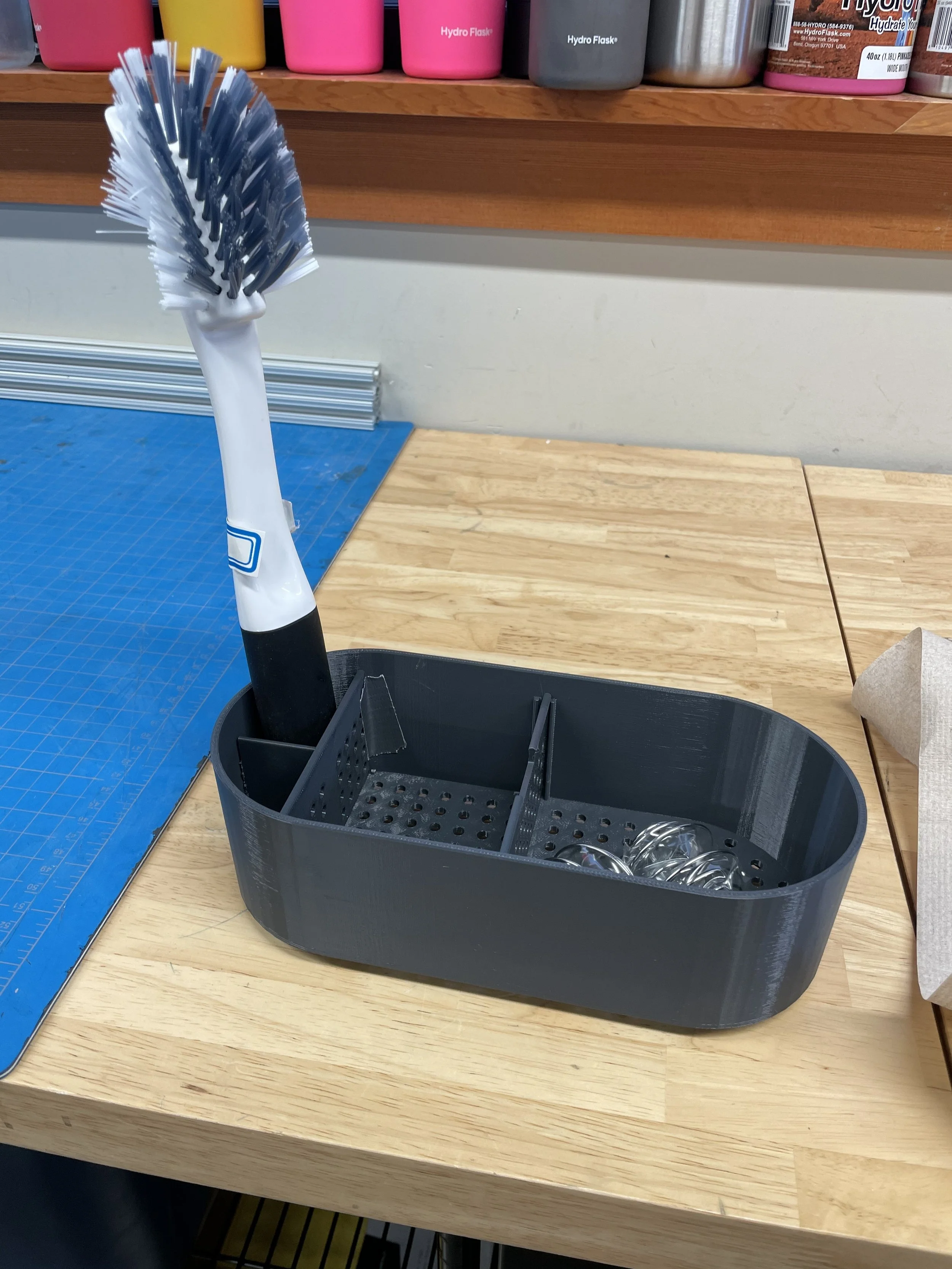
Prototypes ranged from 3D-printed parts to CNC and soft-mock assemblies. Usability testing captured both quantitative metrics, like load stability, and qualitative feedback, such as ease of use and perceived durability, guiding rapid iteration.
Feature creep was a key challenge. I prioritized core functionality and resisted adding ancillary features that would complicate the design, like complex folding mechanisms. This approach ensured a clear, focused product while leaving room for future accessory lines.
The final drying rack addressed user needs, stayed focused on the essential features, and retained Hydro Flask’s design intent, providing a functional, compact, and durable solution.
Hydro Flask
Role: Lead Industrial Design
Launch: 2024